The Journey of the Book
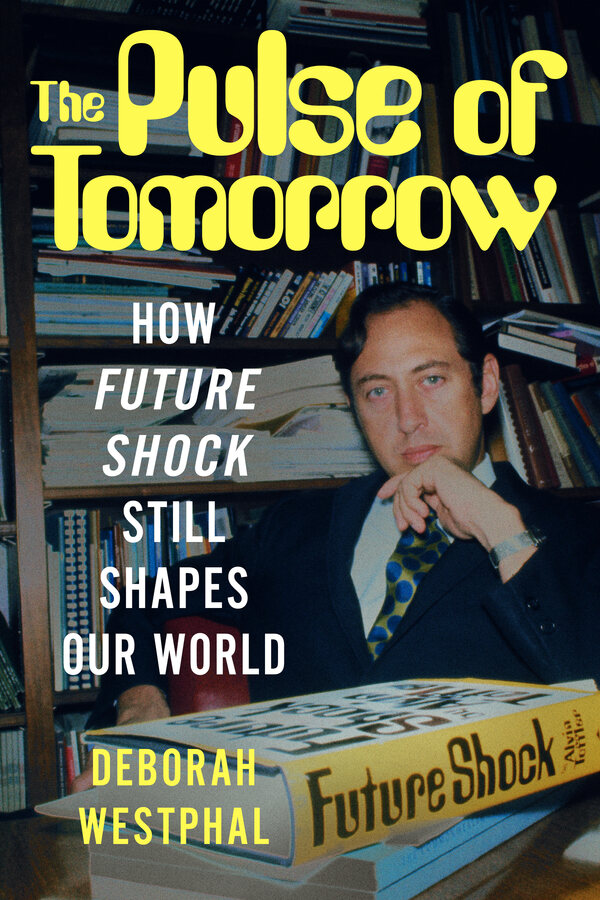
The Pulse of Tomorrow follows Alvin and Heidi Toffler across more than six decades as they learned to recognize change while it was still taking shape and watched their ideas travel far beyond them.
This is not a story about predicting the future. It is about how two people learned to see change differently, and what their journey can teach us about building our own capacity to recognize the changes happening around us now.
Part One
Learning to See
Before Future Shock, The Third Wave, or Powershift, Alvin and Heidi had to learn how to see.
Their education takes them from political activism and factory floors to journalism, Fortune, and the emerging worlds of computers, communications, and corporate change. Again and again, experience challenges what they think they know.
Gradually, a way of working takes shape: question assumptions, test ideas against evidence, move across disciplines, and notice when seemingly separate changes begin to connect.
That leads to a larger question: What happens when change moves faster than people and institutions can adapt?
The answer becomes Future Shock.
Part Two
Testing What They Saw
Once Future Shock enters the world, readers, cultures, institutions, and nations begin interpreting and challenging the Tofflers' ideas.
Their travels through Europe, India, Japan, Eastern Europe, the Soviet Union, and China become another way of testing what they think they understand. They see technological change colliding with different histories, cultures, political systems, and stages of development.
What they learn helps expand their thinking beyond the acceleration at the heart of Future Shock. They begin to see a much larger transformation taking shape, one that will become the framework of The Third Wave. In China, that framework enters a national debate over technology and modernization. In the Soviet Union, conversations about information, openness, and the future begin pushing against the boundaries of the existing system.
The world becomes a place to test, challenge, and deepen what they think they see.
Part Three
Shaping What Comes Next
Eventually, the question changes from What is changing? to What can people do once they recognize it?
Alvin and Heidi sit across from Mikhail Gorbachev as he wrestles with information, technology, and reform. Carlos Slim, J.D. Power, and Steve Case take their ideas in different directions. Military leaders explore how information and technology are changing warfare. Leaders and institutions in Singapore, South Korea, and Taiwan draw on their thinking as they navigate economies increasingly shaped by knowledge and technology.
Across these very different settings, the Tofflers' ideas are no longer theirs alone. Others are testing them, adapting them, and using them to make choices about what comes next.
Their work increasingly asks whether we can recognize change early enough to make different choices.
What Endures
More than fifty years after Future Shock, many of the forces Alvin and Heidi were trying to understand surround us again: information overload, technological acceleration, institutional strain, and different parts of society changing at different speeds.
They helped generations of readers recognize forces of change that were only beginning to take shape.
They questioned assumptions, looked across disciplines, searched for connections, and remained willing to change their minds when the evidence changed.
Their legacy is not a prediction. It is a way of seeing.