Walk through any great museum, and you are not just looking at art.
You are looking at decisions.
Someone funded this. Someone preserved it. Someone decided it was worth carrying forward.
What a civilization sustains shapes its legacy.
Political systems shape the present. Policies influence daily life. Laws organize economies. Speeches mobilize populations. Empires can endure for generations because of administrative strength, military force, and economic power.
Yet they do not endure in memory because their tax codes were efficient or their rhetoric persuasive. Over time, those structures dissolve, and new systems take their place.
What survives are the artifacts: the objects, images, music, architecture, and stories that carried meaning beyond the system that produced them.
Governance sustains a civilization in its moment. Artifacts sustain how it is remembered.
Power shifts. Institutions reorganize. Economies rise and fracture. What remains is what we chose to tend.
Art can emerge anywhere. Creation does not require permission. Endurance does. What survives across generations depends on structure.
When wealth was concentrated in courts and cathedrals, art mirrored hierarchy. When civic institutions expanded, public museums and concert halls emerged. When philanthropy stabilized institutions, archives grew, and orchestras endured. When support collapsed, creative life did not vanish. It adapted. It moved into streets, homes, exile, and coded forms. It narrowed in visibility, leaving gaps no future historian can fully repair.
Artifacts reflect the structure that sustains them. When the structure shifts, the record shifts with it.
Yet one constant persists. Human beings continue to make meaning.
They carve it into stone. They paint it onto canvas. They compose it into music. They write it into stories.
The materials evolve. The platforms shift. The impulse remains.
Instability and Evidence
Every era feels destabilizing from the inside. Those living through transformation rarely describe it as orderly. They experience strain. They debate priorities. They question whether continuity will hold.
Instability has always accompanied change.
What endures is not the system. It is the drive to leave evidence.
We know ancient societies not because their governments survived intact, but because fragments of their cultural life did. Pottery reveals daily rituals long after political structures dissolved. Poetry carries moral imagination beyond the regime that sponsored it. Songs outlast decrees. Architecture stands when policies are forgotten.
When systems fall silent, artifacts become memory.
That is why cultural support is structural, not ornamental.
When societies withdraw support from the arts, they do not eliminate creativity. They narrow the record. Over time, that narrowing shapes how the future understands the past.
When societies steward cultural life deliberately through institutions, philanthropy, and education, they strengthen continuity. They prevent turbulence from erasing testimony.
The arts do not decorate stability. They sustain it.
The Age of Synthetic Abundance
We stand at a different kind of inflection point. Not because creativity has changed, but because its conditions have.
Artificial intelligence can generate images, music, text, and design at staggering speed. It can produce in minutes what once required months of human labor. It can flood the cultural landscape with plausible artifacts.
Abundance has replaced scarcity.
For most of history, the constraint was production. Now the constraint is discernment.
Production is not the same as meaning.
Previous civilizations struggled to create enough. We struggle to decide what deserves preservation.
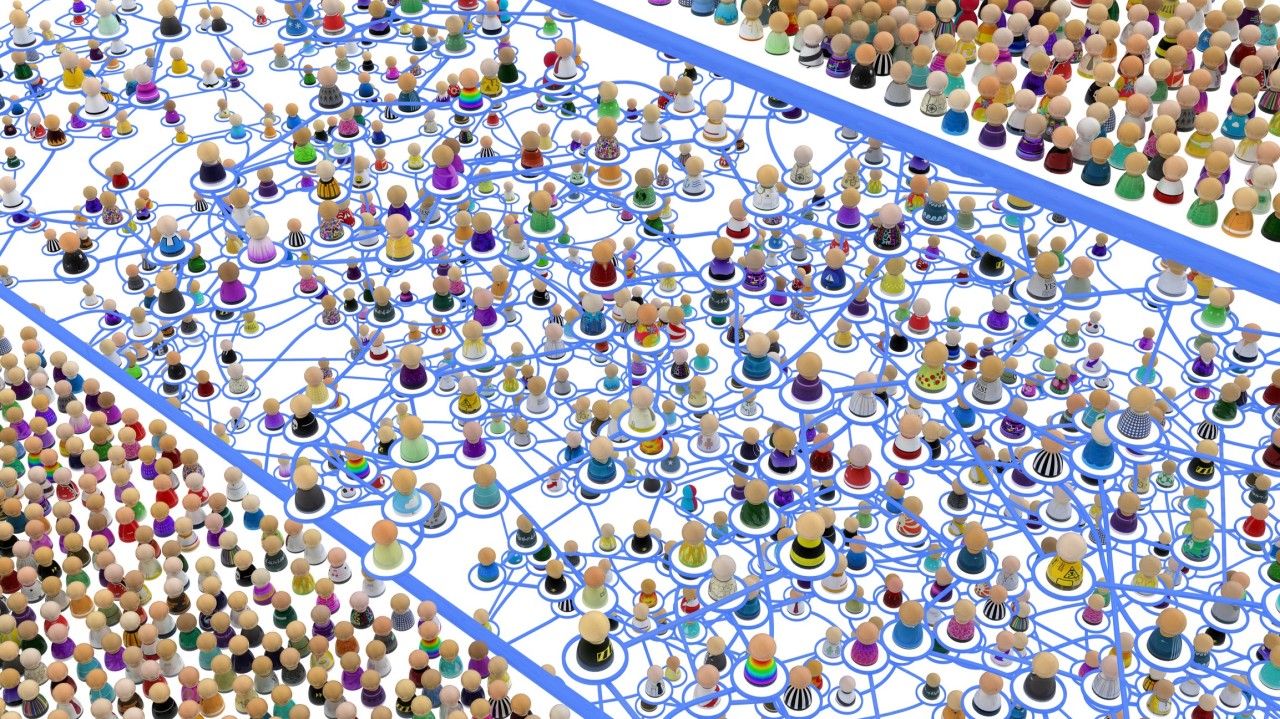
If everything can be generated, what is worth preserving? If output is infinite, what counts as testimony? If algorithms optimize for engagement, who safeguards depth?
AI does not eliminate the human drive to create. It tests whether we can still distinguish human meaning from simulation. In an age of synthetic abundance, stewardship becomes more complicated and more urgent. The risk is not replacement. The risk is obscurity.
Civilizations once revealed their values through patronage and preservation. We may reveal ours through infrastructure: the systems we train, the platforms we scale, the archives we maintain, and the human voices we choose to protect within that flood.
Are we sustaining memory? Or are we sustaining endless generation?
Future generations will not inherit everything we produce. They will inherit what survives curation and institutional will. They will study what we chose to sustain when production outpaced preservation.
What Will Remain
Every civilization leaves a record. That record reflects allocation, not rhetoric. Not what was declared important, but what was sustained.
We are deciding in real time what will represent us as today’s systems reorganize.
Because they will reorganize.
Technologies advance. Political alignments shift. Economic structures recalibrate. Each generation experiences strain. Each generation believes its instability is unprecedented.
And each generation continues to create.
The question is not whether art will exist. It will. Humans do not abandon meaning-making in uncertain times. They intensify it.
The question is whether we are building the architecture that allows human meaning to endure when output overwhelms attention.
Headlines will fade. Policy debates will blur. What remains will be what was preserved.
Every civilization is remembered for what it sustained. And every civilization reveals itself just as clearly by what it allowed to disappear.
When the noise settles, what will remain of us?
What are we choosing to sustain?
And what, quietly, are we allowing to vanish?