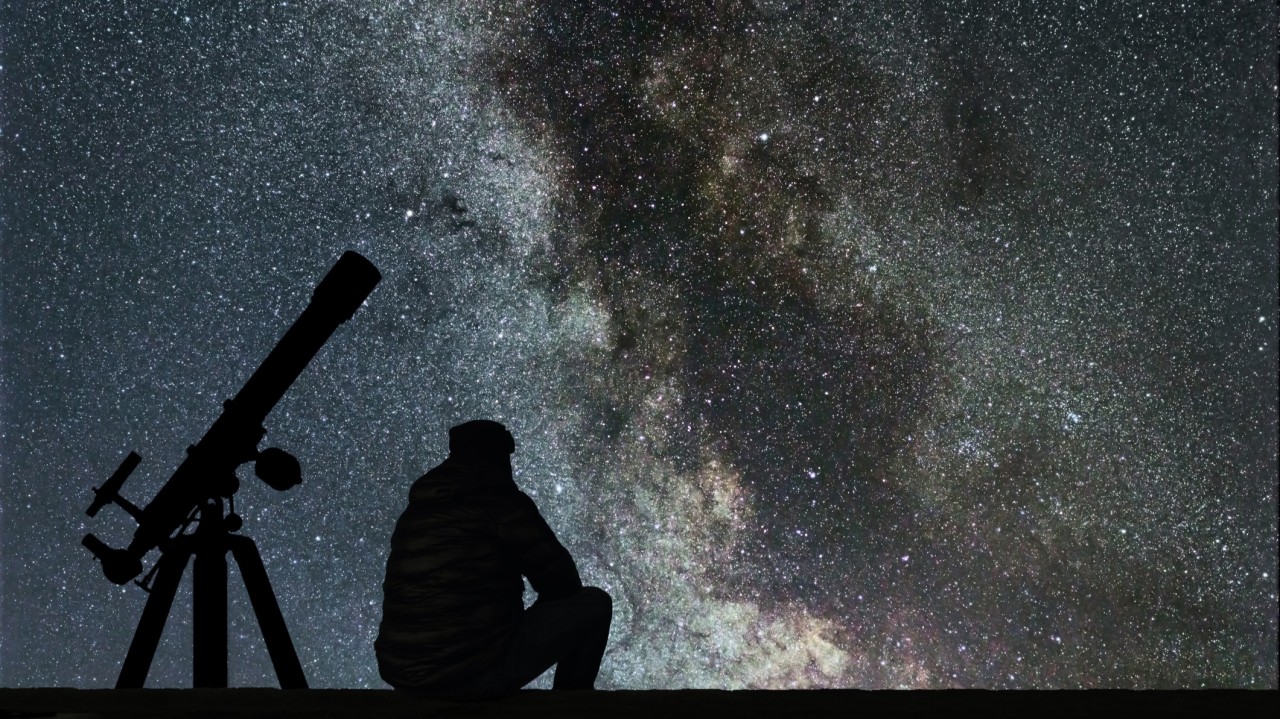
In the beginning, there is almost nothing to see.
A researcher sits alone in a laboratory long after everyone else has gone home. Years of experiments have produced pages of notes, failed trials, and questions that seem to multiply faster than answers. The latest results are intriguing, but not convincing. There isn’t enough evidence to publish. There certainly isn’t enough to persuade a funding committee.
Outside the laboratory, the world carries on. Investors back companies with proven products. Governments fund programs with measurable outcomes. Universities celebrate discoveries only after they have been made. Each is doing what it was designed to do.
Inside, someone returns the next morning and begins again.
History has a way of compressing these moments. We remember the breakthrough but forget the years that came before it. The Nobel Prize overshadows the uncertainty. The discovery becomes inevitable in hindsight, as though success had been visible from the beginning.
It rarely was.
Long before the first proof, there is only a question. Sometimes it begins with a result that refuses to behave the way it should, or a possibility that most people consider too unlikely to pursue.
Nearly every breakthrough has passed through this same quiet stage.
It required someone willing to give discovery what it needed most before anyone could prove it mattered.
Time.
The Long Road to Proof
In 1912, Alfred Wegener looked at a map of the world and noticed something that seemed almost too obvious to mention. The coastlines of South America and Africa appeared to fit together like pieces of a puzzle. Fossils and rock formations told the same story.
He proposed that continents moved.
Most geologists dismissed the idea. Wegener could describe what he observed, but not explain how continents could drift. Without that proof, his idea remained speculation. It would take nearly half a century, new evidence from the ocean floor, and a new generation of scientists before plate tectonics transformed our understanding of the planet.
The pattern repeats itself.
Jennifer Doudna and Emmanuelle Charpentier were not trying to reinvent medicine when they began studying how bacteria defended themselves against viruses. They were following a question. Years later, that curiosity became CRISPR, one of the most powerful tools ever developed for editing genes.
The Human Genome Project was criticized as too ambitious and too expensive. The internet began as a small network connecting researchers. Quantum mechanics described a universe so strange that even many of the scientists who developed it struggled to accept what their mathematics revealed.
Looking back, each breakthrough appears inevitable.
Living through it felt nothing like that.
Progress often looked indistinguishable from failure. Skepticism was understandable.
That uncertainty was not a detour on the road to discovery.
It was the road.
Every breakthrough spends years in the narrow space between possibility and proof.
The challenge has never been recognizing the value of a discovery after there is proof.
It has always been deciding whether to support it before there is.
The Missing Investor
Imagine trying to fund GPS before the first satellite was launched.
Or sequencing the human genome before anyone knew what practical discoveries it might reveal.
Most institutions are built to recognize value after it becomes visible.
Discovery asks something much more difficult. It asks people to commit resources before there is enough evidence to justify doing so.
Most unanswered questions lead nowhere. Before there is proof, tomorrow’s breakthrough and tomorrow’s dead end often look exactly alike.
Only time separates them.
The hardest part of discovery comes before there is enough evidence to justify supporting it.
By the time certainty arrives, the hardest part of the journey is already over.
Once there is proof, markets, governments, and industry know what to do.
The harder question is who is willing to keep the search alive before anyone knows where it will lead.
Buying Time
Not all philanthropy serves the same purpose.
It feeds families after disasters, builds hospitals, funds scholarships, preserves art, and supports clinical trials that bring promising therapies to patients. Those investments improve lives every day.
Yet there is another role philanthropy sometimes plays.
Before there are patients.
Before there are treatments.
Before there are clinical trials.
Before anyone knows whether an idea will ever work.
It provides the one thing discovery cannot create for itself.
The opportunity to continue.
Another question.
Another experiment.
Another unexpected result.
Another day to discover something no one expected.
Every breakthrough consumes talent, patience, and years of work long before it creates value. Above all, it requires the opportunity to keep searching.
The years before a breakthrough rarely look like progress. Experiments fail. Results are inconclusive. Entire lines of inquiry are abandoned.
Yet almost everything that matters is happening beneath the surface. Each unsuccessful experiment eliminates a possibility. Each unexpected result points in a different direction. Knowledge advances by narrowing what remains possible until a pattern finally emerges.
What appears to be failure is often discovery, learning where not to look. Each wrong path leaves behind information the next attempt does not have to rediscover.
This is one of philanthropy’s quietest contributions. It protects questions long enough for answers to emerge.
Most discoveries are not funded after they change the world.
They are supported years earlier, when someone decides the search is worth continuing despite the uncertainty.
We celebrate discoveries once they become inevitable.
We rarely celebrate the years when they looked uncertain.
Every breakthrough begins as a question that cannot yet defend itself.
Hope in science rarely announces itself. More often, it looks like someone willing to try one more experiment.