Some discoveries answer old questions.
Others teach us to ask better ones.
In the summer of 1609, Galileo Galilei heard about a curious invention from the Netherlands. Most people saw a useful instrument.
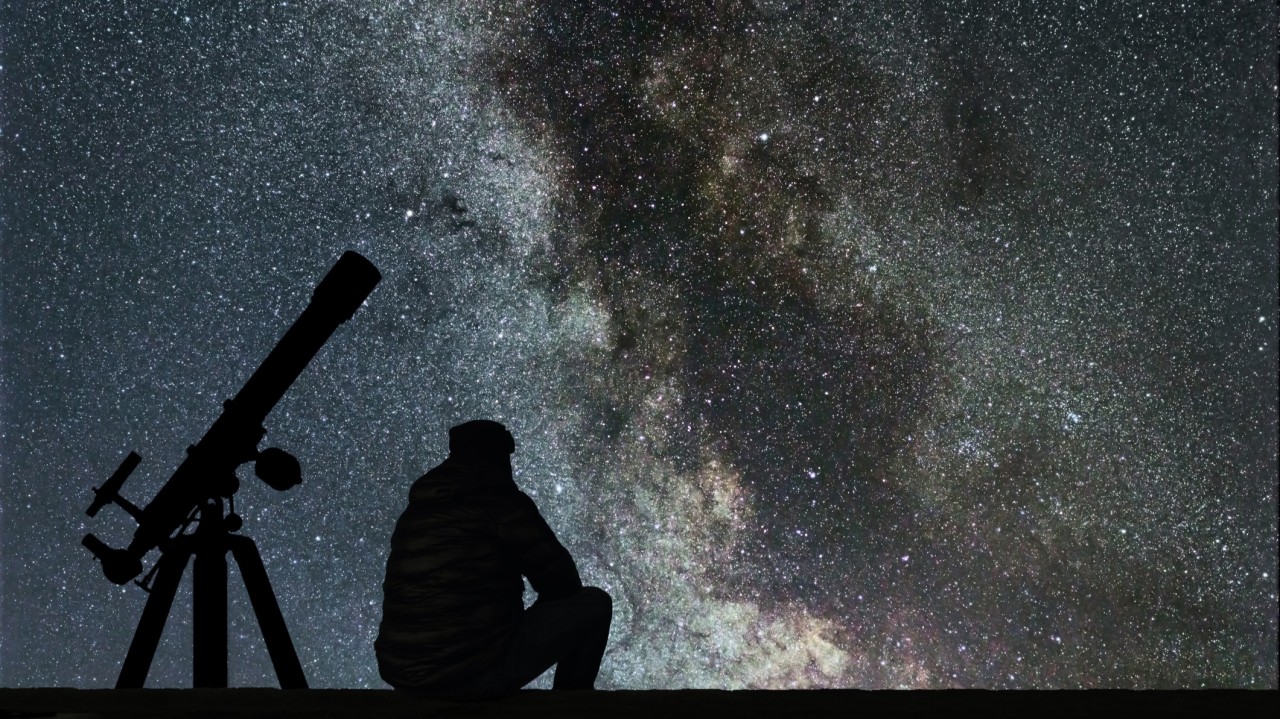
Galileo built one for himself and, instead of pointing it toward the horizon like everyone else, turned it toward the night sky.
The Moon was not smooth. Mountains cast shadows across its surface.
Four small moons circled Jupiter, and Venus passed through phases that shouldn’t have been possible if the universe worked the way nearly everyone believed.
Night after night, Galileo returned to the telescope. Night after night, the universe answered the same way.
The telescope had not changed the universe. It had changed what Galileo was willing to question.
He continued looking.
With every observation, he moved a little farther from what scholars had accepted for generations and a little closer to consequences few people would willingly choose.
Less remembered is the quiet courage required to keep looking once those observations became uncomfortable.
Four hundred years later, our telescopes look different.
Today we look through data, experience, unexpected outcomes, and conversations that challenge our assumptions.
The instrument is different. The question is not.
When reality refuses to fit what we expected, what do we do next?
Do we defend what we already believe?
Or do we ask,
What am I missing?
It is the question that keeps learning alive.
Learning begins when our desire to understand becomes stronger than our need to be certain.
When Certainty Becomes Comfortable
Galileo looked into a universe that proved more complicated than anyone imagined.
Our challenge is different. Information is no longer scarce. It is everywhere.
Every morning begins the same way.
A headline flashes across a screen.
Someone insists a discovery changes everything.
Another dismisses it before finishing the first paragraph.
An expert presents compelling evidence.
Minutes later, another presents equally compelling evidence pointing in the opposite direction.
Scroll a little farther.
Artificial intelligence confidently answers questions about medicine, economics, history, and politics. Ask the same question differently, and it confidently delivers a different answer.
Before breakfast, we have encountered more opinions than our grandparents might have absorbed in a month.
Many contradict one another. Almost all arrive sounding certain.
Somewhere along the way, certainty became easier than understanding.
The quickest answer often feels like the strongest. The loudest voice attracts the most attention, and confidence earns trust long before understanding deserves it.
After a while, continuing to ask questions begins to feel like unnecessary work. We settle on the explanation that feels most convincing or simply the one we already wanted to believe.
That may be the quiet paradox of our age.
Never before have we had access to so much information. Yet never before has it been so easy to mistake certainty for understanding.
The question is whether we keep looking after certainty becomes the easiest answer.
Two Responses To Doubt
Uncertainty makes most of us uncomfortable.
We reach for explanations. We look for patterns. We want the world to make sense again.
From there, two paths begin to emerge.
Some become more curious.
The more they learn, the more they recognize what they do not yet understand. New evidence is not a threat but another opportunity to refine the picture. They ask another question, read another study, consider another perspective.
They are willing to revise yesterday’s conclusions if today’s observations demand it.
Others move in the opposite direction.
Uncertainty becomes exhausting. Questions begin to feel less like invitations to learn than obstacles to overcome. New information is filtered through conclusions already reached.
Contradictory evidence is dismissed before it is seriously considered.
Doubt no longer opens the door to inquiry.
It closes it.
Both begin in the same place.
Neither has all the answers.
The difference lies in what happens next.
One continues searching.
The other decides the search is over.
We call the first skepticism.
Not because skeptics doubt everything, but because they remain willing to ask,
What am I missing?
We call the second cynicism.
Not because cynics question motives, but because they stop questioning themselves.
Why This Distinction Matters
History rarely changes because someone has all the answers. It changes because someone refuses to stop asking questions.
Socrates questioned the certainty of Athens.
Galileo questioned the structure of the universe.
Darwin questioned the permanence of species.
Semmelweis questioned why so many mothers died after childbirth.
Alfred Wegener questioned why continents seemed to fit together like pieces of a puzzle.
None began by trying to overturn accepted ideas. Each began by noticing something that didn’t quite fit.
Most were ignored.
Some were ridiculed.
A few paid a heavy personal price.
Yet they shared something more important than the conclusions they eventually reached. They remained willing to let observation challenge certainty.
What am I missing?
The moment we stop asking it, learning begins to slow, not because we have discovered everything worth knowing, but because we have convinced ourselves there is nothing left to discover. The question keeps inquiry alive.
The Discipline of Staying Teachable
That is the discipline, not doubting everything, not abandoning conviction whenever a new idea appears, and not mistaking confidence for understanding.
The people who continue learning are not those who collect the most information.
They are the ones who never stop testing their understanding against the world around them.
Every observation becomes another chance to refine what they know.
Unexpected outcomes become new questions worth exploring.
Mistakes become evidence that their picture of the world can become a little clearer.
Over time, something subtle happens.
Their confidence grows. So does their humility.
They understand more, while recognizing how much remains to be understood.
That isn’t a contradiction. It’s what learning looks like.
The goal was never to know everything. It was to remain teachable.
Conclusion
That opportunity never disappeared.
It appears whenever reality refuses to fit what we expected. Whenever evidence asks us to reconsider an assumption. Whenever experience quietly whispers,
Look again.
Some people defend what they already know. Others ask,
What am I missing?
That question has changed the course of civilization.
It can change us as well.
Skepticism keeps asking.
Cynicism has already decided.