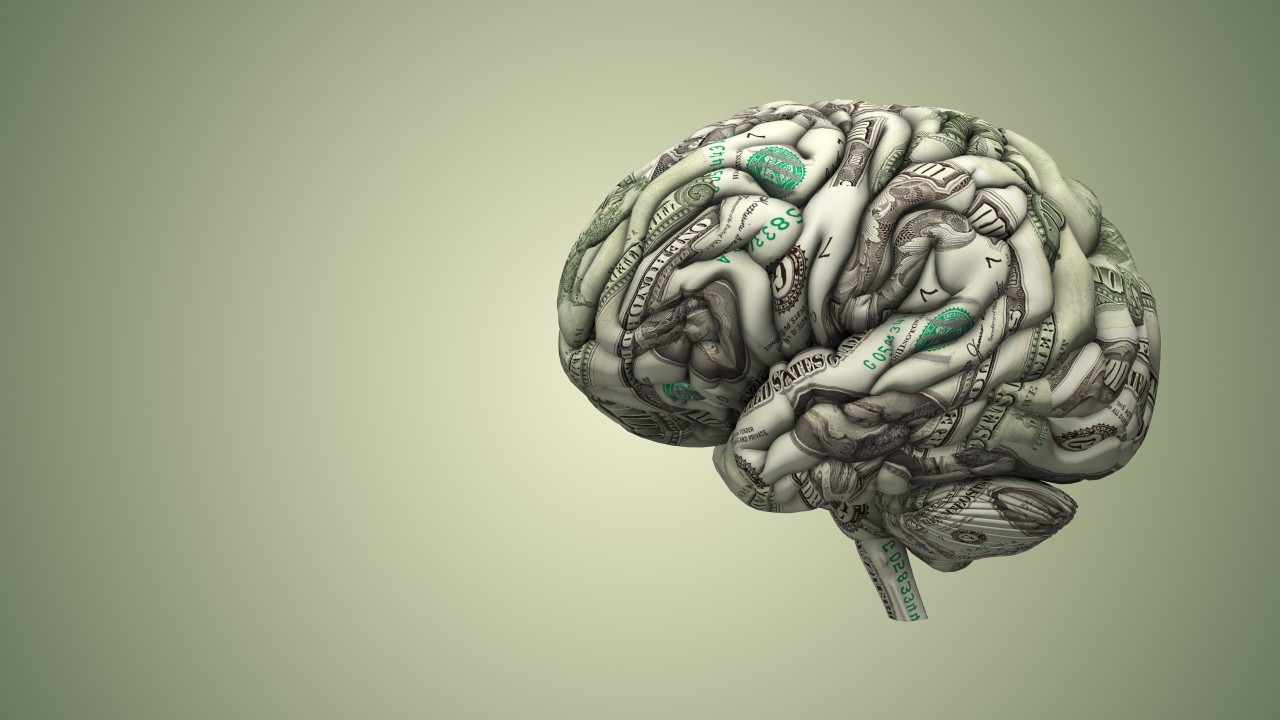
A growing number of researchers, policymakers, investors, and business leaders believe societies are approaching a strategic inflection point. At the very moment economies are becoming more dependent on learning, creativity, judgment, and adaptability, aging populations, declining birth rates, rising cognitive impairment, and increasingly complex technologies are placing those capabilities under growing pressure.
Viewed through this lens, advocates of the emerging brain capital movement argue that preserving and strengthening cognitive capacity may become as important to future prosperity as investing in education, infrastructure, or technology.
The argument is compelling. Yet it raises a more complicated question: what happens when the human mind itself becomes a measurable economic resource?
Never before have human beings possessed greater access to knowledge or more powerful tools for processing it. Information is not the same as understanding, and data does not automatically become insight. As artificial intelligence expands our ability to process information, the scarcity may shift from information itself to the capacity to make sense of it. Technology may accelerate decision-making, but it cannot eliminate the need for human judgment.
In a world shaped by rapid change and growing complexity, the ability to navigate uncertainty may become one of society’s most valuable assets.
If healthy cognition contributes to prosperity, societies will naturally invest more heavily in protecting and strengthening it. History suggests they rarely stop there. Once something acquires economic value, they find ways to measure it.
Once something can be measured, it can also be compared, managed, and optimized.
Historically, societies measure what they value. Just as importantly, they often come to value what they measure.
As measurements spread, institutions build incentives around them. Governments seek efficiency. Employers seek performance. Investors seek returns. Markets seek advantage. Metrics created to illuminate a problem often evolve into mechanisms for managing behavior.
Healthy cognition clearly matters. The larger issue is what happens when cognitive capacity itself becomes an economic asset.
The Optimization Trap
The growing interest in brain capital reflects more than concern about aging or neurological disease. It reflects a world that increasingly depends upon cognitive performance, adaptability, and learning.
As artificial intelligence generates information at an extraordinary scale and automation reshapes work, the scarcity may shift from information itself to the capacity to frame the right questions. Organizations rarely suffer from a shortage of data. They struggle to determine which questions matter, which assumptions deserve scrutiny, and what actions should follow.
If healthy cognition becomes one of society’s most valuable assets, the next step seems almost inevitable. Societies will attempt to strengthen, preserve, and improve it.
At first, the benefits appear obvious. Advances in neuroscience, biomarkers, artificial intelligence, and precision medicine could help identify disease earlier, preserve cognitive function longer, and improve quality of life for millions of people. Individuals could remain independent longer, while societies retain expertise, institutional memory, and resilience.
Yet every effort to improve something also changes the way people think about it.
Imagine a future in which aspects of brain health and cognitive capability can be measured with increasing precision. Employers might view such measures as indicators of performance, adaptability, or future potential. Insurers might incorporate neurological indicators into risk calculations. Governments might seek ways to strengthen population-level cognitive resilience. Investors might evaluate a nation’s cognitive capacity as a strategic economic asset.
The benefits are easy to see. The consequences may emerge more gradually.
What happens when preserving brain function becomes not merely a personal goal but an economic expectation? Could efforts to strengthen cognitive resilience improve human flourishing? Or could they create subtle pressures to evaluate people according to neurological performance, predicted potential, or measurable outcomes?
History offers a familiar pattern. Societies identify something valuable. They develop ways to measure it. They build incentives around those measurements. Over time, the measurements themselves begin to influence behavior. The original goal may remain noble. The consequences are often more complicated.
The Confidence Trap
A deeper question lies beneath the discussion: What exactly are we trying to optimize?
Despite remarkable advances in neuroscience, we still understand only a fraction of how the brain works. Researchers continue to debate the origins and mechanisms of Alzheimer’s disease, Parkinson’s disease, and other neurological conditions. They continue to explore how memory, creativity, judgment, learning, emotion, and resilience emerge from the brain’s extraordinary complexity. If we do not fully understand the system itself, defining an “optimal” brain becomes far more difficult than it first appears.
Neurodiversity adds another layer of complexity. Characteristics associated with autism, ADHD, dyslexia, and other forms of cognitive difference may create challenges in some environments while providing advantages in others. Pattern recognition, creativity, systems thinking, and unconventional problem-solving often emerge from minds that do not fit traditional definitions of normal. Some of society’s most important breakthroughs may have depended on precisely those differences.
What if future systems reward conformity while overlooking the very forms of cognitive difference that often drive innovation?
We often mistake what we can measure for what we believe we understand. Test scores become proxies for intelligence. Economic indicators become proxies for prosperity. Social media metrics become proxies for influence. The problem is rarely the measurement itself. The problem begins when the metric becomes a substitute for the far more complex reality it was intended to describe.
What if the qualities that matter most, such as judgment, wisdom, creativity, curiosity, empathy, resilience, and moral reasoning, prove resistant to quantification? What if the dimensions of human cognition we value most are precisely those that refuse to fit neatly into a score, index, or economic model?
Before asking how to optimize cognition, we may first need to ask whether some of its greatest strengths resist standardization altogether and whether our measures capture what matters most or simply what is easiest to quantify.
What Should Remain Beyond Measure?
Brain capital offers genuine promise. If advances in measurement accelerate research, improve prevention, preserve cognitive health, and reduce the burden of neurological disease, society stands to benefit enormously.
Yet every new form of capital eventually reshapes the institutions built around it.
If cognitive capacity becomes measurable, who will control that information, and how will it be used? Who will people trust with something as personal as the functioning of their own minds? Will such measures create opportunities for support and prevention, or will they create new incentives for discrimination, exclusion, and commercial advantage?
The scientific challenges are formidable. The ethical questions may prove even more consequential.
What obligations do societies have to protect cognitive privacy?
Who decides what constitutes a healthy, productive, or valuable mind?
What parts of human experience should societies never convert into economic metrics?
The future may depend upon preserving healthy minds. It may depend just as much upon resisting the temptation to reduce human beings to the metrics they produce.
History follows a familiar pattern. Societies identify something valuable. They develop ways to measure it. They build incentives around those measurements. Over time, the measurements begin to shape behavior. What begins as an effort to support human potential can gradually evolve into a system that defines it. Brain capital may become the next chapter in that story.
The greatest risk may not be that we measure the brain incorrectly. It may be that we become confident we understand it well enough to optimize it.
If so, the most important issue may not be how we measure, improve, or preserve cognition. It may be deciding what we choose not to monetize.
When cognition becomes capital, what should remain beyond measure?