A patient receives a notification late at night. The test results have arrived.
Within seconds, information that once required phone calls, appointments, and days of waiting appears on a screen. By every conventional measure, the system is a success. Access has improved. Information moves faster. Friction has been eliminated.
Yet minutes later, the patient is sitting alone in the dark, searching the internet for answers. There is no physician available to provide context, no opportunity to ask questions, and no expertise available to help interpret unfamiliar terminology. Long before a doctor can explain, the patient has already begun constructing a story about what the results might mean.
When the physician finally calls, the explanation is far less alarming than imagined. The anxiety was real. The danger was not.
The technology worked exactly as intended. The information arrived instantly. Understanding arrived later.
That contradiction extends far beyond healthcare.
The technology worked exactly as intended. Something else did not.
Navigation has never been easier, yet fewer people know how to find their way around their city. Information has never been more abundant, yet confidence in what is true continues to erode. Algorithms increasingly assist decisions, yet opportunities to exercise judgment are becoming less common. Technologies designed to connect people have expanded communication while loneliness continues to rise.
In each case, the solution works. The contradiction appears in what follows.
Where Capability Goes
Every innovation transfers capability somewhere.
A calculator transfers computation from a person to a device. GPS transfers navigation from memory to software. Recommendation engines transfer decision-making from people to algorithms. Patient portals transfer access from institutions to individuals.
Most of the time, these transfers are beneficial. Society becomes more efficient, productive, and capable overall. The goal is not to preserve inconvenience for its own sake. Few people are eager to return to paper maps, hardline telephones, or waiting days for information. The question is what opportunities to exercise judgment, solve problems, and adapt may quietly disappear along the way.
A deeper question sits beneath these advances.
What happens when a society becomes dependent on capabilities it no longer reliably produces?
Many of the activities technology now performs for us do more than accomplish a task. They required people to navigate uncertainty, make judgments with incomplete information, recover from mistakes, and adapt when conditions changed. The task itself may no longer matter. The capabilities it exercised still do.
For generations, progress was measured by what new technologies enabled people to do. The future may require a second measure: what those technologies leave behind.
Technologies perform. People adapt. When conditions change unexpectedly, societies rely on judgment, trust, creativity, resilience, and the ability to navigate uncertainty. Those capabilities do not appear automatically. They are cultivated through experience and strengthened through use.
Cognitive Infrastructure and the Risks Ahead
Societies routinely invest in physical infrastructure because they understand the consequences of neglect. Roads deteriorate. Bridges weaken. Power grids become vulnerable. The risks are visible.
Cognitive infrastructure is different. It consists of judgment, trust, adaptability, resilience, and the capacity to navigate uncertainty distributed across millions of people. Unlike roads or power grids, these capabilities rarely fail all at once. They weaken gradually through disuse.
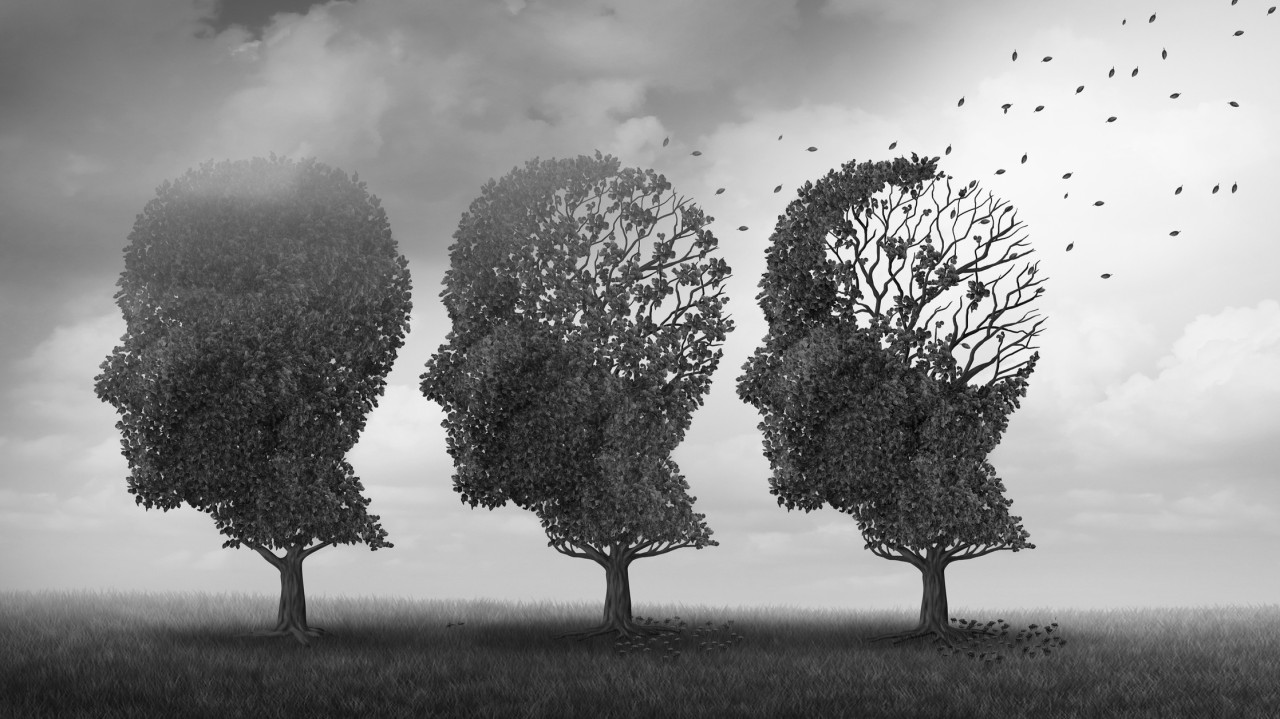
That creates a different kind of vulnerability. A society can become increasingly dependent on capabilities it no longer reliably produces. The vulnerability may remain hidden for years, only becoming visible during moments of disruption, uncertainty, or crisis when those capabilities are needed most.
Physical infrastructure can often be rebuilt with materials, money, and time. Human capability follows a different logic. Families, mentors, teachers, colleagues, and communities carry these capabilities forward from one generation to the next. Each generation inherits knowledge, judgment, and experience from the one before it. When fewer people practice those capabilities, fewer people carry them forward. Over time, entire societies can lose the ability to reproduce them. Eventually, societies can lose not only the capability itself, but the capacity to reproduce it.
The question is no longer whether our technologies are becoming more capable. The question is whether our society continues to cultivate the capabilities on which adaptation ultimately depends.
The Next Measure of Progress
The danger is not that technology becomes more intelligent. The danger is that human independent judgment, problem-solving, and the capacity to adapt receive less practice in a world increasingly designed to reduce their need.
For decades, progress was measured by what innovation enabled. Faster communications, greater access to information, more powerful tools, and more efficient systems expanded the boundaries of human possibility.
Yet a different question is beginning to emerge. We have become remarkably sophisticated at measuring what technologies can do. We are far less sophisticated at measuring what they may be changing in us.
Who is measuring whether judgment, decision-making, adaptability, and the ability to navigate uncertainty are becoming stronger or weaker over time? What would tell us if a society were becoming better—or worse—at cultivating them?
The future may not be determined solely by the intelligence we build into our technologies. It may depend just as much on whether we continue cultivating the expertise, resilience, and decision-making capabilities that societies need when certainty disappears and conditions change.
As our technologies assume more responsibility, the question is no longer what they can do. The question is whether we are preserving the human capabilities on which adaptation ultimately depends.