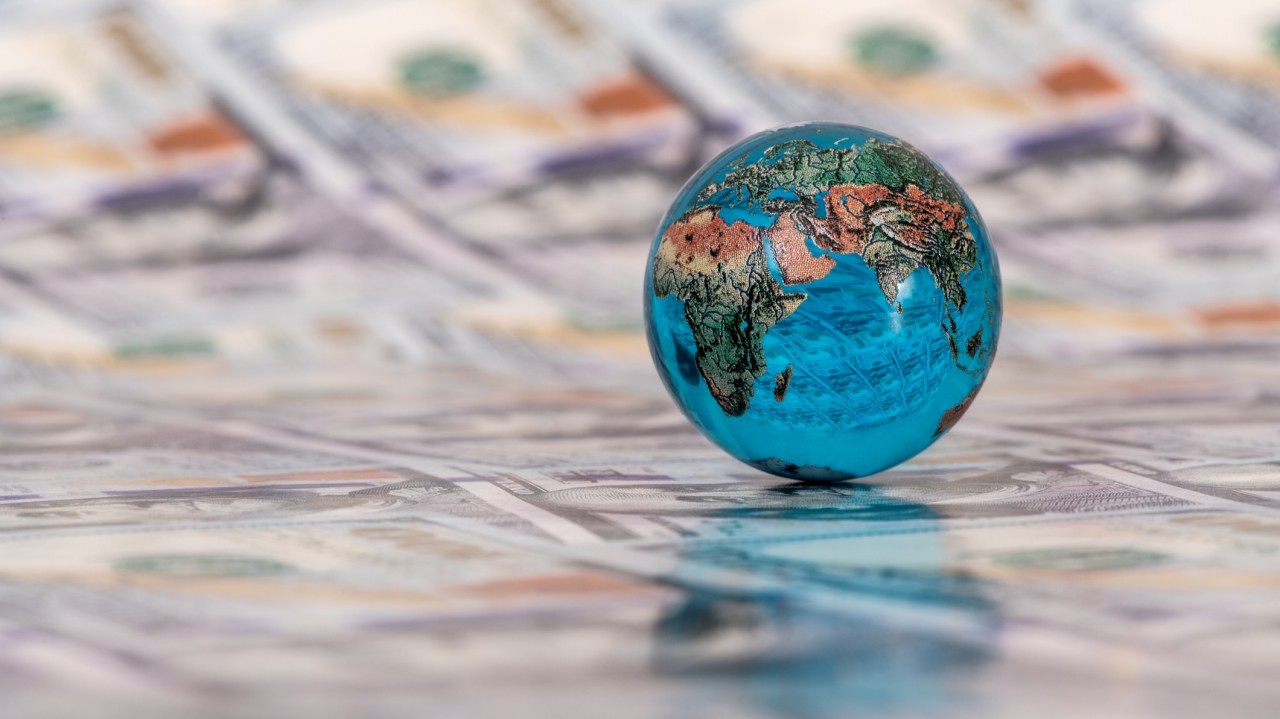
The ground beneath the global economy keeps shifting in uneven, unpredictable ways. Prices rise in some places and fall in others. Supply chains strain under unfamiliar pressures. Investors brace for volatility even as new industries surge with promise. Policymakers trade confidence for caution. People sense that traditional economic language no longer matches the reality of their lives. This unsettled moment feels familiar. We have stood here before, watching an old order struggle to explain a world growing more complex by the day. To understand what is unfolding now, we can look back to a time when conventional economic logic could no longer keep pace with change.
The Era When Old Economics Collapsed
By the late 1960s, the U.S. economy still radiated postwar confidence, yet deep cracks had already formed. A decade of “guns and butter” spending, financing the Vietnam War while expanding the Great Society strained the system. Prices crept upward. Wages struggled to keep up. Families felt their paychecks lose power. Business leaders warned that costs were rising faster than they could plan for or invest in.
By the early 1970s, those cracks widened into fractures. Productivity slowed just as global competition intensified, mainly from Japan and Western Europe. Millions of baby boomers entered the workforce, increasing labor supply just as companies tried to hold down costs. The world’s financial architecture, long anchored by Bretton Woods, buckled. When the dollar broke from gold in 1971, it set off a chain reaction that rippled from New York to London to Tokyo.
Then came the oil shocks. After OPEC tightened supply in 1973, energy prices soared. Gas lines stretched for blocks. Trucking companies cut routes. Manufacturing costs spiked. Airfare jumped. Households worried about heating their homes. Prices for plastics, fertilizer, transportation, and food surged almost overnight.
For many people, it felt as if the economy had turned against them. Inflation rose month after month, yet hiring stalled. Workers feared both losing their jobs and the rising cost of living. Policymakers long used to choosing between inflation and unemployment now faced both at once. Economists debated on television, their models failing in real time. Newspapers popularized a new term, stagflation, because no existing vocabulary explained what people were living through.
Confidence eroded. Certainty evaporated. The models that had guided decades of prosperity no longer predicted, described, or made sense of events unfolding outside. Economists kept searching for answers with tools built for another world. The system was changing faster than the theories meant to explain it.
They were still thinking with what Alvin Toffler called “1929 blinders.”
A New Lens Emerges
It was into this widening gap between old theories and new realities that Alvin Toffler stepped. In his 1975 Esquire essay, “Beyond Depression: No more inflation, stagnation, recession or bust—just eco-spasm,” he argued that the turmoil of the early 1970s was not a typical recession or inflationary cycle. It was a structural seizure, a system trying to evolve while policymakers clung to outdated assumptions.
Eco-spasm captured something deeper than a downturn: a convulsion triggered by accelerating change, social diversification, technological disruption, and obsolete mental maps.
Toffler saw how industrial societies were splitting into new lifestyles, values, and consumption patterns. A once-uniform society was becoming a diverse mosaic. These changes reshaped demand, altered labor markets, and transformed culture yet, economics treated society as if it were still homogeneous and stable.
At the same time, the division of labor approached diminishing returns. More coordination, reporting, and administrative work are piled onto workers’ days. Bureaucracy grew. Information flow, rather than physical production, became the glue holding institutions together. Few recognized how these shifts were redefining productivity and organizational life.
Even money moved faster, not via digital technologies that did not yet exist, but through changes in everyday behavior. People moved more often, switched jobs more frequently, and replaced goods more quickly. Businesses shortened inventory cycles and expanded supplier networks. The velocity of money increased as dollars changed hands more rapidly. Traditional economic tools could not handle a world where social acceleration amplified instability.
Economists were fighting a 1970s fire with 1929 hoses. And that mismatch remains a warning.
Today’s Economy: A Familiar Fracture
The parallels to today are striking. Once again, forces that do not fit old models reshape the economic landscape. And as in the 1970s, the real disruption comes from the collision between rapid change and outdated frameworks.
Artificial intelligence transforms productivity and labor. Climate events disrupt agriculture, insurance, and infrastructure. Geopolitical tensions shift the flow of energy, trade, and critical materials, exposing how dependent modern growth has become on fragile supply chains. The extraction of rare earth minerals involves environmental, labor, and geopolitical challenges. Yet, these materials remain fundamental to the technologies fueling global expansion. Consumer expectations shift with new norms and mobility, while generational turnover introduces new values and spending patterns. Digital networks accelerate the movement of money, information, and culture, turning every shock into a ripple that travels farther and faster.
Acceleration now touches everything. Behavior, preferences, and demand diversify at a pace that old theories cannot interpret. Once again, the lived experience of millions outpaces the models designed to explain it.
The greatest danger today mirrors the 1970s: not instability itself, but our dependence on frameworks that cannot account for the speed and complexity shaping modern life.
We Need Economics That Reflects the World We Live In
Alvin Toffler argued that societies find stability not by resisting change but by understanding it and adapting with intention. His work reminds us that economics must evolve as a living system shaped by human values, cultural change, technological acceleration, demographic shifts, and global interdependence.
The challenge is not to restore an old equilibrium. It is to design systems capable of evolving with complexity rather than collapsing under it. We must build institutions and practices that operate at the velocity of the world they serve. We need models that reflect society as it is and will be, not as it once was.
The eco-spasm concept remains relevant because it forces us to confront the question that will define our economic future:
Are we redesigning our systems for future resilience and strength or merely patching them until the next shock arrives?