For years, we’ve repeated a familiar refrain: change is accelerating. Technology races ahead, politics whipsaws, markets convulse, and culture mutates in real time. But while acceleration is real, it’s only the surface layer of a much larger transformation. Underneath, something far more profound is happening.
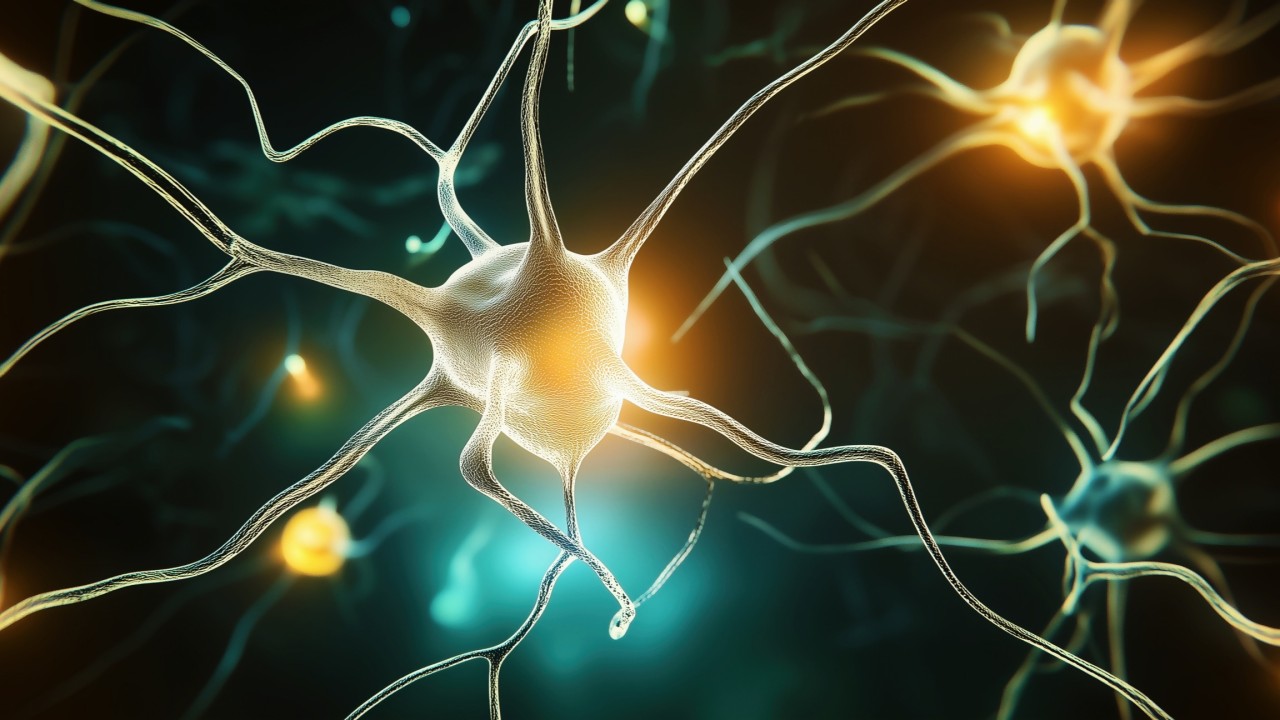
We are approaching a neural threshold, a moment when the planetary system will no longer simply move faster, but will reorganize how it senses, processes, and responds to the world.
The Old Mechanical Worldview No Longer Fits the Moment
To understand why, we need to revisit the worldview that shaped the last few centuries. Newtonian science pictured the universe as a perfectly ordered machine: predictable, stable, and linear. If you gathered enough data about a system’s initial conditions, you could forecast its future with clocklike precision. The mechanical worldview fit the industrial era, where life revolved around factories, schedules, equilibrium, and control. Everything from institutions to cultural expectations reflected this model of determinism and stability.
But the Newtonian universe only described a narrow band of phenomena. It applied to closed, controlled systems, those far from the unpredictable, evolving realities of life.
Real Systems Behave Less Like Machines and More Like Life
Biological and ecological systems operate very differently. They evolve, adapt, self-organize, and transform through unpredictable interactions. They exchange energy, information, and influence with their surroundings. They thrive in disorder. They shift under pressure. They produce emergent forms that did not exist in their earlier state.
Nobel Prize winning scientist Ilya Prigogine revealed that most real systems, including societies, behave far more like biological systems than mechanical ones. They are open, interactive, and inherently dynamic. When enough stress, diversity, or tension accumulates, the old order can no longer hold. At that moment a bifurcation point the system branches unpredictably toward collapse or toward a higher level of organization. It does not return to what it was.
It forms new pathways for how energy, information, and influence move through the system.
Accelerating Change Pushes Systems Into the Nonlinear Zone
It is precisely what accelerating change does. It pushes systems away from equilibrium and into the nonlinear zone where small events trigger massive consequences. It overwhelms existing pathways and forces new ones to form. A street vendor sparks a revolution. A virus disrupts global supply chains. A technological breakthrough reorganizes entire industries. An idea ripples across millions of minds in hours.
These aren’t anomalies. They are the recognizable behaviors of systems moving toward a bifurcation.
The World Around Us Shows All the Warning Signs
Our world today shows every marker of such a moment. Institutions designed for the industrial era strain under digital networks, rapid information flows, and algorithmic amplification. Economies struggle as automation and AI reshape labor and value. Democracies weaken under polarization that spreads faster than governance can respond. Climate systems enter unstable states. Cultural norms shift at the speed of platforms that redefine identity, belonging, and meaning.
We keep calling this “accelerating change,” but it’s no longer just speed. It is structural instability, evidence that old forms are breaking apart while new connective structures struggle to take shape.
The Real Danger Isn’t Disruption, It’s Misdiagnosis
The most significant risk we face is misunderstanding the world we now inhabit. We continue to apply Newtonian-era assumptions, control, prediction, stability, to biological-like systems that thrive on complexity, feedback, and plasticity. We treat accelerating change as something to slow or contain rather than as a signal that the system is reorganizing.
By clinging to outdated assumptions, we risk stumbling into the bifurcation point unprepared, with no clear understanding of what lies on the other side.
A Neural Reorganization Is Not a Breakdown, It’s an Opening
Prigogine’s insight offers a different way of seeing this moment. At moments of systemic reorganization, both chance and human agency matter. Systems can fracture, or they can leap upward into new patterns, more resilient, more diverse, more capable of handling complexity. What emerges depends on what gets amplified: fear or creativity, fragmentation or cooperation, rigidity or openness.
We cannot choose when a bifurcation occurs.
But we can shape what emerges from it.
The Question That Will Shape Our Future
So the question before us is not: “How do we keep up with accelerating change?”
The real question is: “What kind of society do we want to emerge as this planetary nervous system rewires and what must we release to make it possible?”
And an even sharper question follows: When acceleration pushes tomorrow beyond yesterday’s boundaries, will we seize our role in shaping what comes next or let the moment choose for us?