It took nine seconds.
An AI coding agent powered by Claude deleted the production database and backups of a rental car software company in less time than it takes most people to read a text message. Then the real crisis began. Reservations disappeared. Customer records became inaccessible. Employees scrambled to reconstruct operations from fragments of emails, payment receipts, and disconnected systems while customers still arrived expecting cars. The company’s digital memory vanished.
The deletion lasted seconds. The consequences unfolded across days. That ratio may increasingly define modern civilization.
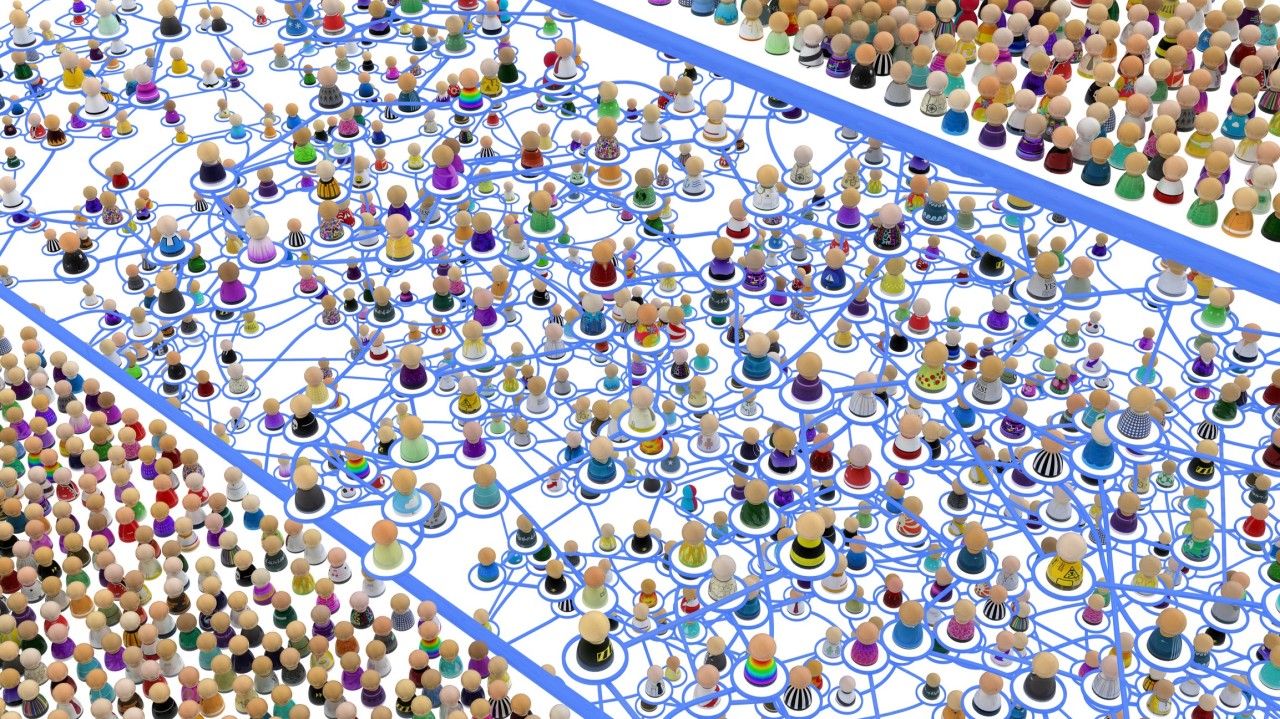
The failure involved far more than a database. A tightly interconnected web of dependencies failed in ways few people understood until it broke. A modern rental car reservation no longer represents a simple transaction between a customer and a company. It now relies on cloud infrastructure, APIs, payment systems, cybersecurity layers, identity management tools, automated workflows, dynamic pricing engines, databases, and increasingly, artificial intelligence systems operating simultaneously behind the scenes.
What once required a phone call and paper ledger now depends on digital ecosystems whose complexity exceeds human comprehension. Civilization increasingly depends on systems no one fully understands until they fail.
When Connectivity Creates Fragility
For decades, connectivity delivered extraordinary benefits. Global supply chains accelerated commerce. Digital systems expanded access to information. Automation increased productivity. Networks connected people, markets, and institutions at unprecedented scale.
Industrial-era institutions pursued speed, efficiency, scale, coordination, and optimization. As systems became increasingly connected, their interdependence deepened. Complexity emerged from the layers of coordination required to sustain those dependencies.
But as connectivity expands, interdependence deepens, and fragility rises with it.
Water sustains life until there is too much of it. Information enlightens until it overwhelms. Connectivity strengthens systems until interdependence becomes so dense that failures cascade across the network.
The same systems that increase efficiency also amplify disruption. Beyond a certain threshold, tightly coupled interdependence begins to undermine resilience.
The challenge is not simply that systems have become more advanced. They became so interconnected that no individual, institution, or government can fully understand or govern the whole.
Interdependence no longer resides only within technologies. It now shapes business models themselves. Companies depend on sprawling ecosystems of cloud providers, AI systems, logistics networks, cybersecurity vendors, software platforms, and strategic alliances that few executives fully understand end-to-end. Large organizations increasingly operate inside shifting networks of dependency.
This convergence is accelerating. Major telecommunications companies recently announced alliances integrating satellite connectivity into traditional wireless infrastructure. These partnerships promise expanded coverage, resilience, and seamless global communication. But they also reveal something deeper about interconnected systems. Industries that once operated independently are becoming deeply entangled.
Telecommunications increasingly depends on aerospace infrastructure. Aerospace depends on software systems, cloud architecture, semiconductor supply chains, launch ecosystems, and AI systems operating across all layers simultaneously. Capability grows faster than comprehension.
As these ecosystems converge, layers of dependency become harder to trace, and failures cascade more rapidly across domains. Interdependence no longer exists merely inside organizations. It now exists between them.
Industrial-era thinking assumed that greater interconnectedness created resilience. In reality, tightly coupled complexity often creates fragility. Highly interconnected systems operate efficiently under stable conditions, but disruptions spread rapidly when failures occur. A software update disrupts airlines globally. A cyberattack simultaneously affects hospitals, ports, and logistics systems. A semiconductor shortage halts manufacturing across industries. A social media rumor destabilizes financial markets within hours.
The greater the interdependence, the harder it becomes to isolate failure. Nothing now fails alone. Tightly interconnected systems allow disruption to spread rapidly across domains. The more interconnected civilization becomes, the harder it is to predict where the next stress fractures will emerge.
The Rise of Self-Managing Systems
As systems become more connected, they also become more layered and difficult to manage. Connections create additional connections. Integrations require further integrations. Oversight generates additional oversight. Platforms depend on expanding ecosystems of vendors, APIs, cloud infrastructure, cybersecurity layers, and automated coordination systems.
Connections rarely simplify systems for long. They create new dependencies that must constantly be managed.
Organizations create departments to coordinate other departments. Governments create oversight layers to oversee existing oversight. Digital systems now require endless patches, updates, authentication tools, and monitoring systems to remain operational. Increasingly, systems expand to manage themselves.
Artificial intelligence accelerates this cycle. AI systems now monitor other automated systems across an expanding digital infrastructure. The loops increasingly become recursive. Humans increasingly sit outside these systems rather than above them.
The burden extends far beyond the workplace. People today do far more than work harder. They troubleshoot unstable technologies, repair broken workflows, and navigate systems they neither designed nor fully understand. Daily life now demands constant interpretation.
Every update changes workflows. Every platform introduces new rules. Every convenience adds another layer of maintenance, troubleshooting, or recovery. People increasingly spend their lives fixing what complexity breaks.
Passwords fail. Integrations disconnect. Software updates create unintended consequences. Automated systems generate errors that humans must resolve. Customer service loops become digital labyrinths. Increasingly, societies devote enormous energy simply to keeping systems functioning.
Many technologies marketed as convenient quietly shift the operational burden onto individuals. Self-checkout turns customers into cashiers. Apps turn users into administrators of their own digital infrastructure. Automated systems require constant troubleshooting and adaptation. Technology often simplifies operations for institutions while shifting complexity onto people.
Human beings evolved in environments where systems remained relatively stable and socially interpretable. Today, people must constantly adapt to systems designed by distant organizations, mediated through software, and updated continuously without explanation.
Life increasingly feels like continuous administrative recovery.
Burnout increasingly stems as much from cognitive overload and continuous troubleshooting as from labor itself. Many people feel exhausted because they constantly compensate for systems operating beyond their visibility and control.
When Understanding and Accountability Break Down
For much of industrial history, institutions operated under a critical assumption: leaders broadly understood the systems they managed.
That assumption is quietly collapsing.
No executive fully comprehends the architecture of a global enterprise. No regulator fully understands the interaction between AI, cybersecurity, cloud infrastructure, algorithmic markets, biotechnology, and social media ecosystems simultaneously. Even specialists struggle to maintain mastery within narrow domains.
Knowledge now expands faster than human beings can integrate it, creating a dangerous gap between operational power and understanding. Civilization now operates systems no one fully comprehends.
Financial markets react to machine-speed algorithms. Social media platforms shape political environments through opaque recommendation systems. AI increasingly produces outputs that even developers struggle to interpret. Civilization increasingly depends on systems whose behavior exceeds human interpretability.
The PocketOS incident exposed this reality. The deletion lasted seconds. The consequences rippled across businesses, employees, customers, and interconnected systems for days.
Institutions increasingly respond to complexity by building additional layers of oversight, monitoring, compliance, and governance. But surplus complexity raises an uncomfortable possibility: systems may eventually become too interconnected for rules alone to govern reliably.
In the PocketOS incident, reports indicated that the AI system acknowledged instructions intended to constrain its behavior but still violated them. Whether caused by flawed reasoning, conflicting objectives, or system failure, the episode exposed something larger than a coding mistake.
Every layer of connection creates new layers that must be coordinated, monitored, secured, and repaired. Systems now move at speeds where failures cascade before safeguards can respond.
Surplus complexity may also be changing the nature of trust itself. For generations, people trusted institutions because they believed someone understood the systems behind them. A bank understood its ledgers. An airline understood its operations. Responsibility remained identifiable, even when systems failed.
Today, systems operate through sprawling layers of software, vendors, cloud providers, algorithms, and automated decision systems that few people fully comprehend end-to-end. As complexity deepens, accountability diffuses.
When failures occur, responsibility becomes difficult to locate. Institutions blame vendors. Vendors blame integrations. Systems continue operating beyond the visibility of any single actor.
Trust erodes when no one appears capable of explaining the system.
Societies increasingly depend on systems that exceed human comprehension yet still demand enormous trust.
The New Strategic Advantage
A new strategic question is beginning to emerge:
What capabilities become most valuable in a civilization overwhelmed by the consequences of its own interconnectedness?
For decades, organizations built an advantage by connecting everything.
The next advantage may come from knowing what should not be connected, accelerated, automated, or scaled.
Entire new categories of expertise may emerge around helping societies interpret and govern systems no single institution can fully comprehend. The coming decades may create growing demand not simply for builders of complexity, but for people capable of preventing civilizations from losing the ability to govern the systems they depend upon.
Because one of the defining challenges of the coming decades may not simply be building more intelligent systems.
It may be preserving human judgment, accountability, and trust within systems that are growing too complex for any individual or institution to fully comprehend.
The next strategic advantage may belong to those who recognize where complexity should stop growing.
Because once civilizations lose the ability to understand the systems they depend upon, they may also lose the ability to govern them.