As a child, you probably never questioned the premise of Horton Hears a Who!. An elephant hears tiny voices coming from a speck of dust. Naturally, an entire civilization is living there. Children’s books are wonderfully accommodating that way.
Today, the story resonates in ways Dr. Seuss could never have anticipated.
A different question begins to emerge. What if someone in Whoville heard a voice coming from a speck of dust beneath their feet? And what if the inhabitants of that tiny world discovered yet another world beneath theirs? Before long, Horton would be standing at the edge of an infinite nesting doll of civilizations, each convinced it occupied a complete universe until it discovered another hidden beneath it.
The idea sounds absurd until you consider what modern science is revealing.
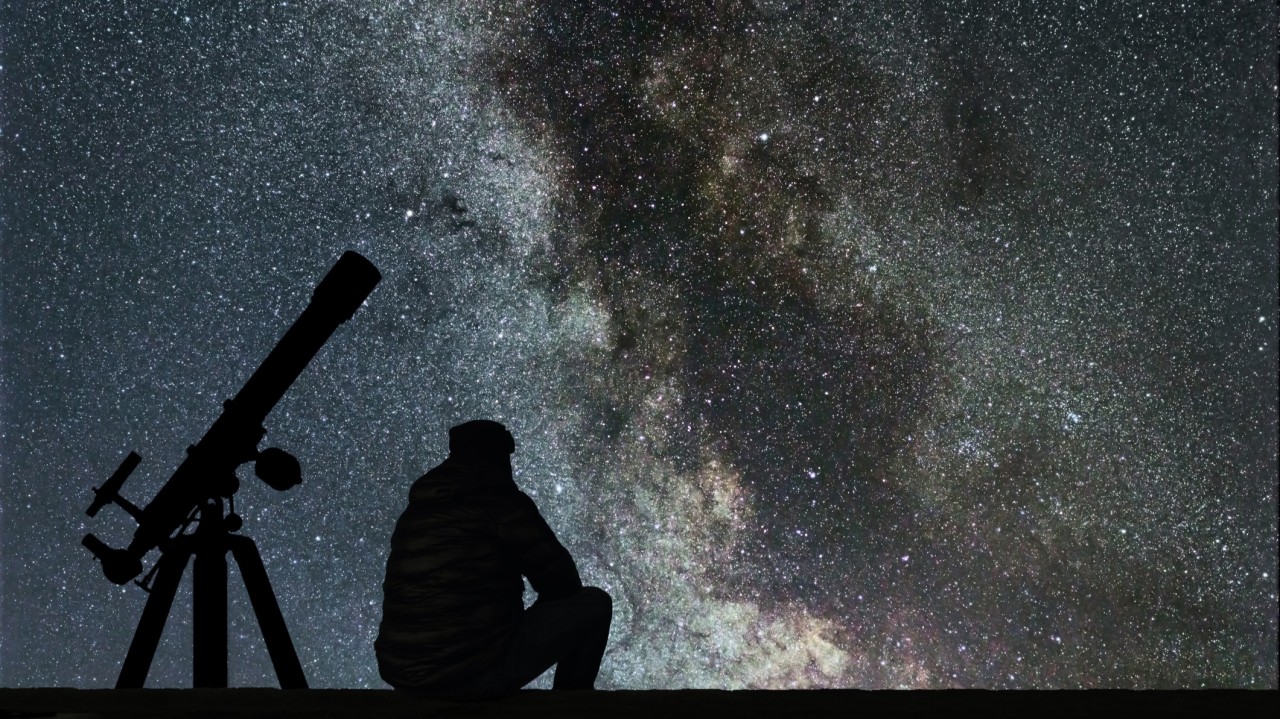
For most of human history, discovery meant looking farther away. Explorers crossed oceans in search of new lands. Astronomers built larger telescopes to peer deeper into space. Nations launched satellites, probes, and astronauts beyond Earth’s atmosphere. Progress was measured by distance. The farther you could see, the more you believed you understood.
Today, some of the most remarkable discoveries are occurring in the opposite direction.
Looking Inward
Every generation inherits new tools for seeing. With every improvement in imaging, genomics, artificial intelligence, and computational biology, scientists are peering into regions of reality that previous generations could not see. What once appeared familiar now feels almost unexplored.
Instead of looking farther outward, we are uncovering entire worlds hidden within ourselves.
The telescope revealed that Earth was not the center of the universe.
The microscope revealed that life existed on scales previously invisible to human perception.
Scientists discovered cells.
Inside cells, they found organelles.
Inside organelles, they found molecular machinery.
Beneath that machinery, they discovered genetic instructions.
Beyond those instructions, they uncovered regulatory networks.
And within those networks, they found layers of biological communication that continue to surprise us today.
Each discovery illuminated part of the mystery while revealing how much remained unseen.
The closer we look, the larger reality becomes.
The Universe Inside Us
The pattern continues throughout modern medicine and neuroscience. In recent decades, discoveries such as the microbiome have transformed our understanding of health and disease. Trillions of microorganisms living within us influence immunity, metabolism, inflammation, and even aspects of mental health.
Neuroscience offers a striking example. For decades, researchers focused primarily on neurons. Today, they are discovering the important roles played by microglia, the blood-brain barrier, vascular networks, and countless interactions that earlier generations lacked the tools to observe. Scientists are creating entirely new areas of research as they uncover phenomena that once hid in plain sight.
Researchers once viewed the blood-brain barrier primarily as a protective wall separating the brain from the rest of the body. Today, it increasingly appears to be an active participant in health, aging, and disease. The barrier is no longer just a boundary. It is becoming part of the story.
Advances in imaging, molecular biology, and computational analysis continue to reveal relationships that earlier generations could not observe. The world’s scientists are uncovering what has existed all along. We are only now learning how to see them.
New Tools, New Worlds
One of the most remarkable features of discovery is that reality is almost always richer than our first explanation. Before microscopes, bacteria existed. Before telescopes, galaxies existed. Before genetic sequencing, molecular instructions governed life. These realities did not suddenly appear when new tools were invented.
Artificial intelligence may become the next great instrument of perception. Much of the discussion surrounding AI focuses on automation and productivity. Those applications matter, but its most profound impact may lie elsewhere. AI may help us detect patterns, relationships, and interactions hidden within oceans of information—signals that have always been present but remained beyond our ability to perceive.
In neuroscience alone, researchers are already using AI to analyze enormous amounts of data involving genes, proteins, cells, imaging, behavior, and disease. Relationships that once remained hidden inside mountains of information can now begin to emerge. AI functions less as a replacement for human intelligence and more as a new instrument for discovery.
Just as the microscope revealed life operating beyond the limits of ordinary sight, AI may reveal relationships operating beyond the limits of ordinary thought. It may help researchers hear faint signals buried within immense complexity—patterns that have been present all along but were impossible to distinguish from the surrounding noise.
The Humility Gap
The pattern appears again and again throughout history.
People explained disease before they knew microbes existed. Astronomers mapped the heavens before realizing that most of the universe lay beyond what they could see. Today, scientists continue uncovering biological interactions that earlier generations had no way to observe.
What feels complete often changes when a new tool, perspective, or question comes into view.
The same dynamic appears far beyond science. Organizations, businesses, governments, and societies make decisions using the information available to them. Yet some of the forces shaping outcomes remain hidden until circumstances bring them into view.
Perhaps the challenge is not how much we do not know.
Perhaps the challenge is remembering how much may still be unseen.
Listening for the Next Voice
The future may belong to people who cultivate the same habit of mind. Not because they possess all the answers, but because they remain open to the possibility that reality is larger than current assumptions allow.
As researchers probe deeper into aging, disease, consciousness, and human biology, each frontier crossed reveals another beyond it.
Every generation inherits a map of reality.
Then new tools arrive.
The edges move.
Blank spaces become destinations.
What looked like an endpoint becomes a doorway.
Future generations will almost certainly wonder what remained hidden in plain sight.
Which raises a final question:
If entire worlds can remain hidden within our own bodies for centuries, what wonders surround us today that we have not yet learned to see?