Telegraph operators began reporting something they had never seen before.
Messages continued traveling across the wires even after power supplies had been disconnected. Sparks leaped from telegraph keys. Some operators received electric shocks. In a few offices, telegraph paper caught fire.
Outside, another mystery was unfolding. Brilliant curtains of red, green, and violet light stretched far beyond the northern latitudes where they normally appeared. People across North America, Europe, and even parts of the Caribbean stood outside watching the sky glow with colors few had ever seen. Newspapers reported that the light was bright enough to read by long after midnight.
It was September 1859.
Across continents, people witnessed pieces of the same mystery without realizing they were connected.
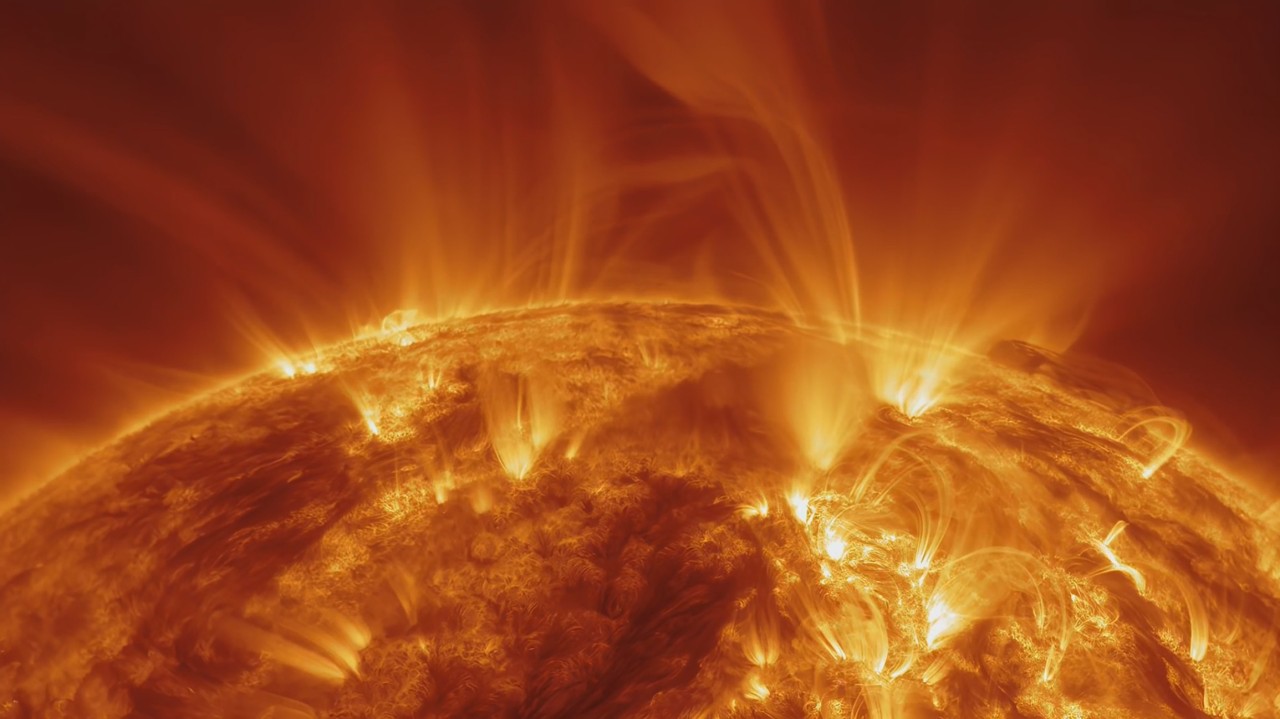
The Sun had reached across ninety-three million miles and touched the Earth.
Within a generation, the event had largely faded from memory.
Experience Has Limits
The strange lights disappeared. Telegraph systems were repaired. Life resumed.
For those who witnessed it, the story became part of their lives. For their children and grandchildren, it became a story they never heard. The event would later become known as the Carrington Event.
We prepare for storms we’ve already lived through. We remember the mistakes that once cost us dearly. A driver who has slid across black ice slows down the next winter without thinking about it. A family that has lived through a hurricane is more likely to keep bottled water in the garage long after the skies have cleared.
Eventually the lessons disappear, but the habits remain.
Experience is an extraordinary teacher, until the lesson comes only once every hundred years.
Some things happen so rarely that almost no one has lived through them, yet they are too important to ignore.
By the time they happen again, the people who remember the last one are often gone. Their notebooks remain. Their warnings sometimes do not.
Every now and then something breaks around the house, and my first instinct is still to call my dad. He always seemed to know how to fix things. Today I search YouTube, read manuals, and piece together an answer. I can usually find the information. What I can’t replace is the judgment that came from decades of experience.
A New Kind of Memory
Experience isn’t the only thing that fades. Memory does too.
Over the last hundred years, scientists and engineers have each discovered a small piece of the puzzle. Until recently, those lessons were spread across books, reports, filing cabinets, and the minds of people who eventually retired.
That is beginning to change. For the first time, we are building tools that can connect discoveries made over many years, in many fields, and in many countries. Patterns we couldn’t see before are starting to appear.
For most of history, keeping what we learned depended on people. But libraries burn. Reports are discarded. Experts retire. Sometimes people simply forget what mattered. Eventually, the reason an old event mattered disappears with the people who remembered it.
Keeping what we’ve learned no longer depends entirely on people.
But solving the memory problem does not solve the judgment problem.
The Judgment Problem Doesn’t Disappear
One morning an artificial intelligence system issues a warning.
After studying old records, satellite data, and what the Sun is doing today, it warns there is a good chance another Carrington-scale solar storm could occur.
Assume the analysis is right. Assume every scientist agrees.
The difficult part begins after that.
Somewhere, the person responsible for keeping the power on has to decide whether to spend billions making the electrical grid stronger. While somewhere else, a government official is weighing investments in hospitals, cybersecurity, and disaster preparedness. Both are looking at the same evidence.
But they don’t have to make the same choice.
Should electrical grids be hardened? Should satellites be redesigned? Should governments invest billions preparing for an event that may not occur for decades? Or should those resources be spent on problems that feel more immediate?
None of that answers the most important question.
What deserves action? That is not simply a technical decision. It is deciding what matters most when you can’t do everything.
As artificial intelligence helps us connect more information and recognize patterns, the challenge changes.
The challenge used to be finding enough information.
Increasingly, the challenge will be deciding what deserves our attention.
The scarce resource may no longer be knowledge.
It may be judgment.
The Next Age of Wisdom
The Carrington Event was not forgotten because it lacked importance.
It disappeared because human memory fades. Generations pass. Experience changes. The lessons that once felt urgent gradually become history.
Tomorrow, it may no longer be.
In 1859, the Sun reminded humanity that nature does not care what we remember.
Artificial intelligence may remember everything.
Information can be stored.
Judgment still has to be learned.